
Nature Writing Summer Camp in Blessington Library with School of Looking
As facilitators, there are few things as pleasurable for us as a good creative collaboration. So when Anne Cleary and Denis Connolly from The School of Looking asked if we were interested in working with them on their Catchments 2025 project, our ears were instantly piqued.
Catchments 2025 is a countrywide creative community project that aims to mobilise “Citizen Art” as a complement to “Citizen Science”, the two contributing to society’s growing concern for the environment and reflecting the need for an understanding of the world that is driven by both data and empathy, nurturing both artistic creativity and scientific curiosity.
Specifically, the project used natural water sources as its focal point. In Wicklow, that water source was the Liffey Head Bog, where the River Liffey starts its winding journey through County Wicklow into Dublin and out to sea.
Anne and Denis wanted us to help them design a community writing project around the Liffey Head Bog, and we had just the idea in mind. We suggested a Nature Writing summer camp for young writers in Blessington Library where we have a brilliant cohort of committed creatives who come to our camps every year.
Anne and Denis heartily agreed and so together we formulated a plan to spend four days in Blessington Library with a group of writers aged 9-13, and in the middle we’d all go on a field trip to the Liffey Head Bog for a day of practical exploration.
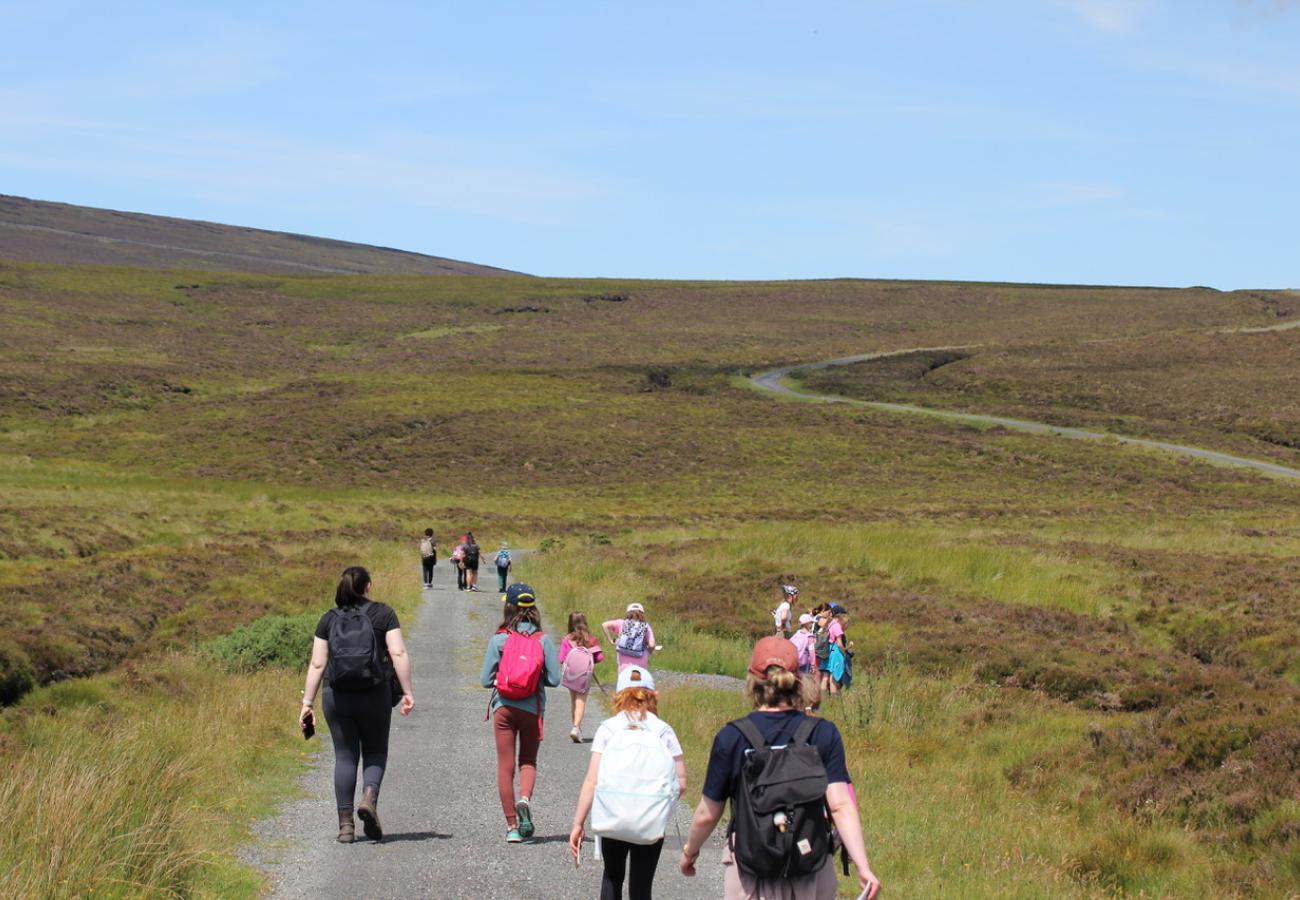
The Field Trip
In the second week of July, a team of Fighting Words mentors assembled in Blessington for this unique project. On day one, we met the 15 young writers in the library where we made our introductions, chatted about the links between creativity and nature, and practiced some of the writing exercises we’d be doing later in the week.
Then on day two, we boarded a bus for our exciting field trip!
Anne and Denis had been on the bog with a different group the day before, and told us there had been so much fog they could barely see any landmarks. As luck would have it, however, the day we went was b-e-a-utiful with clear skies and 20+ degrees. We’d been warning everyone to bring raingear, and yet there we were in shorts and sunhats!
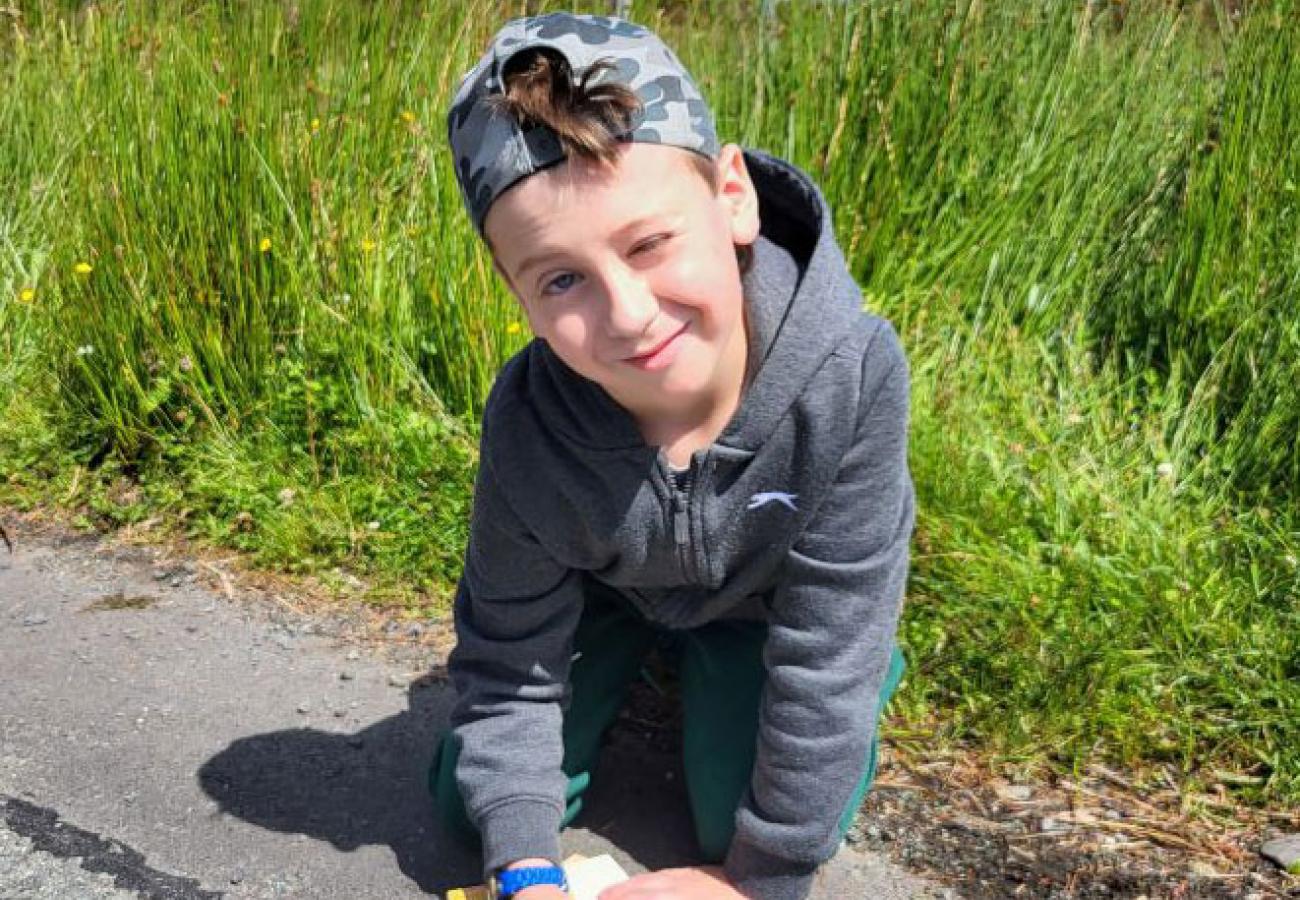
The bus ride up to the bog turned out to be longer, hotter, and twistier than we’d expected, but we arrived in one piece, ready for action – and we didn’t have to wait long. Within five minutes of arriving, we saw two huge dragonflies swooping around the scrub, only two meters of our group.
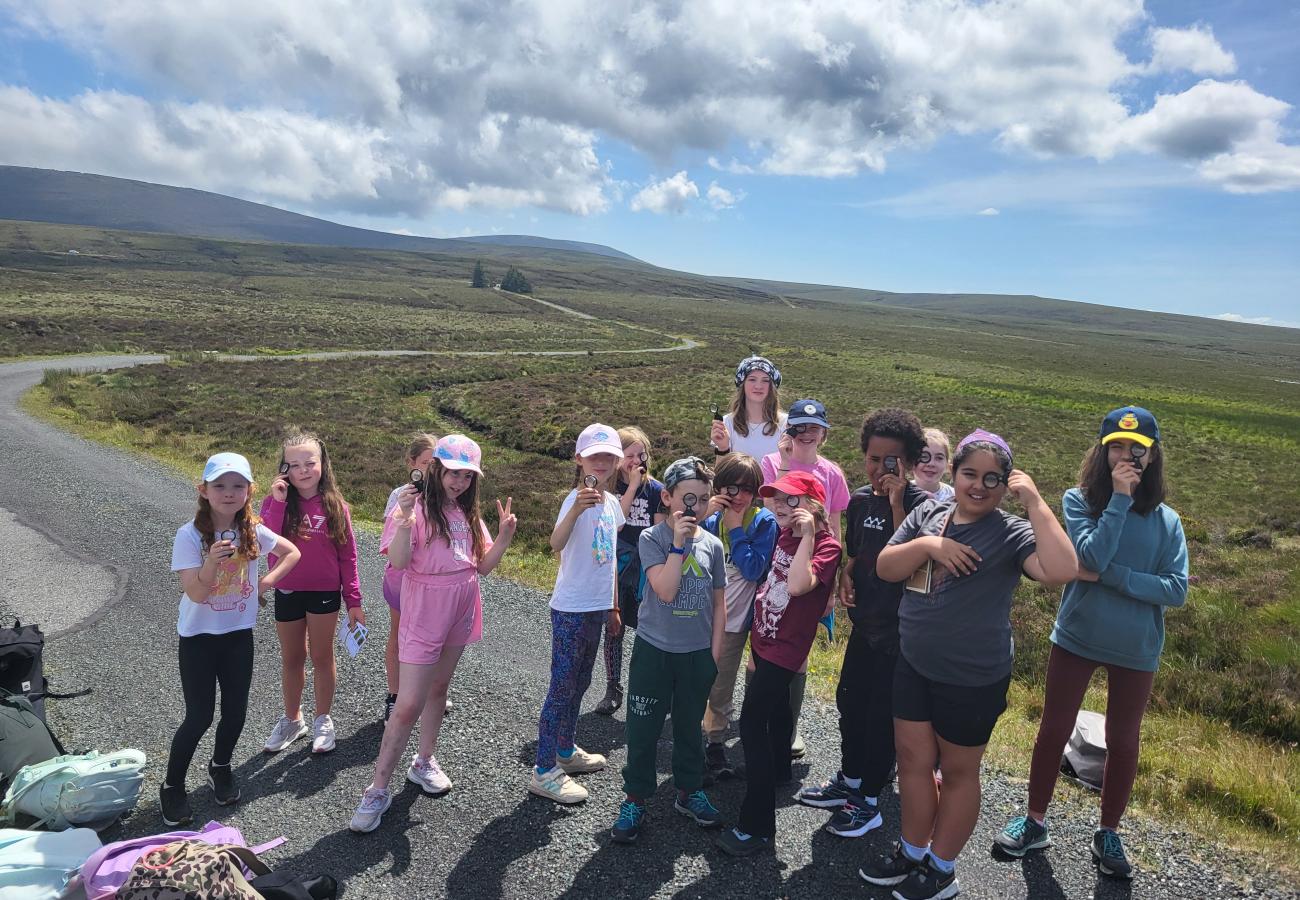
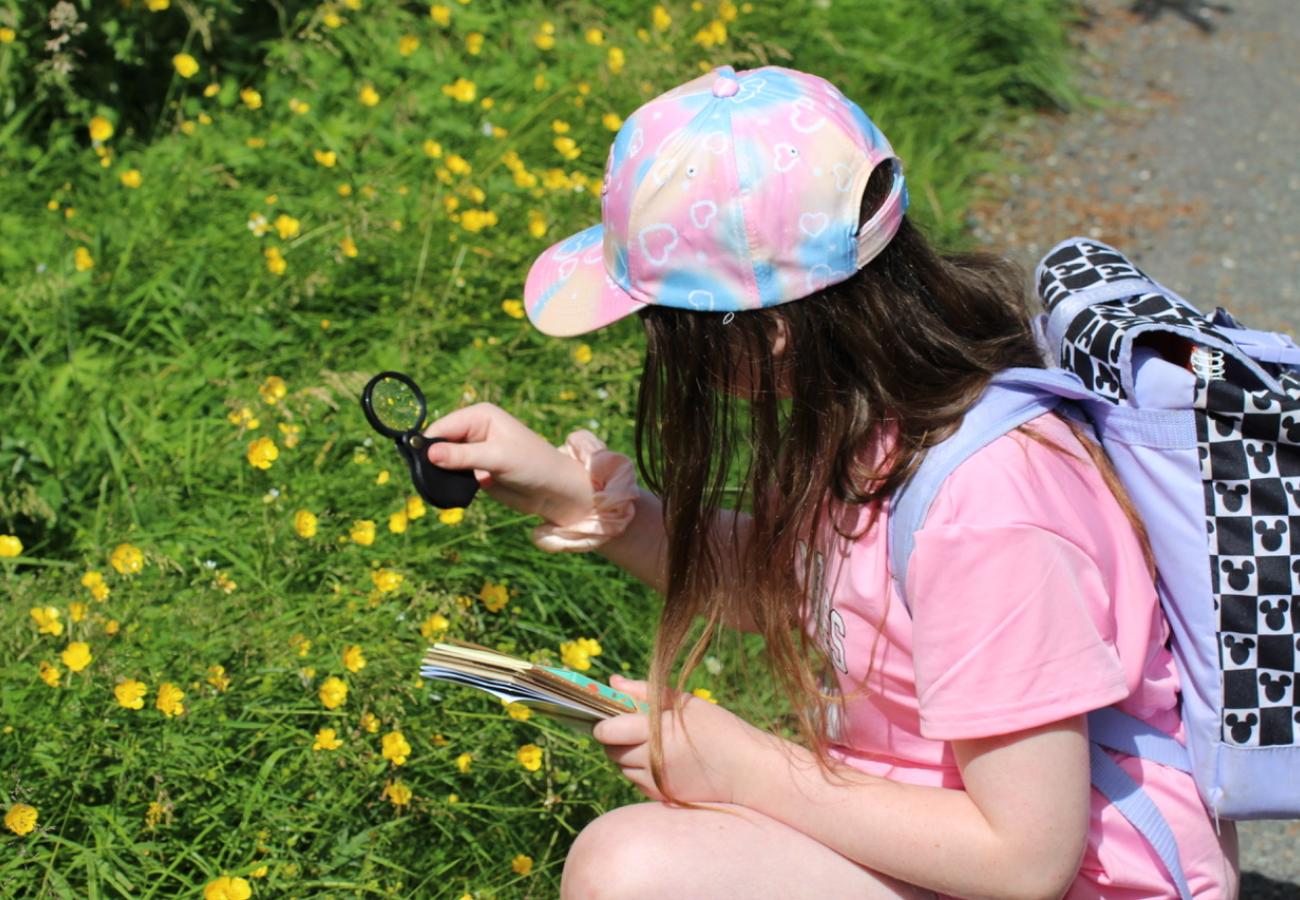
Anne and Denis gave everyone a plant identification booklet, a notepad, and a mini magnifying glass, and challenged everyone to find, identify, and sketch five plant species. It didn’t take long! Then we all strolled up the path to see what else could be seen, stopping to look at oddities along the way.
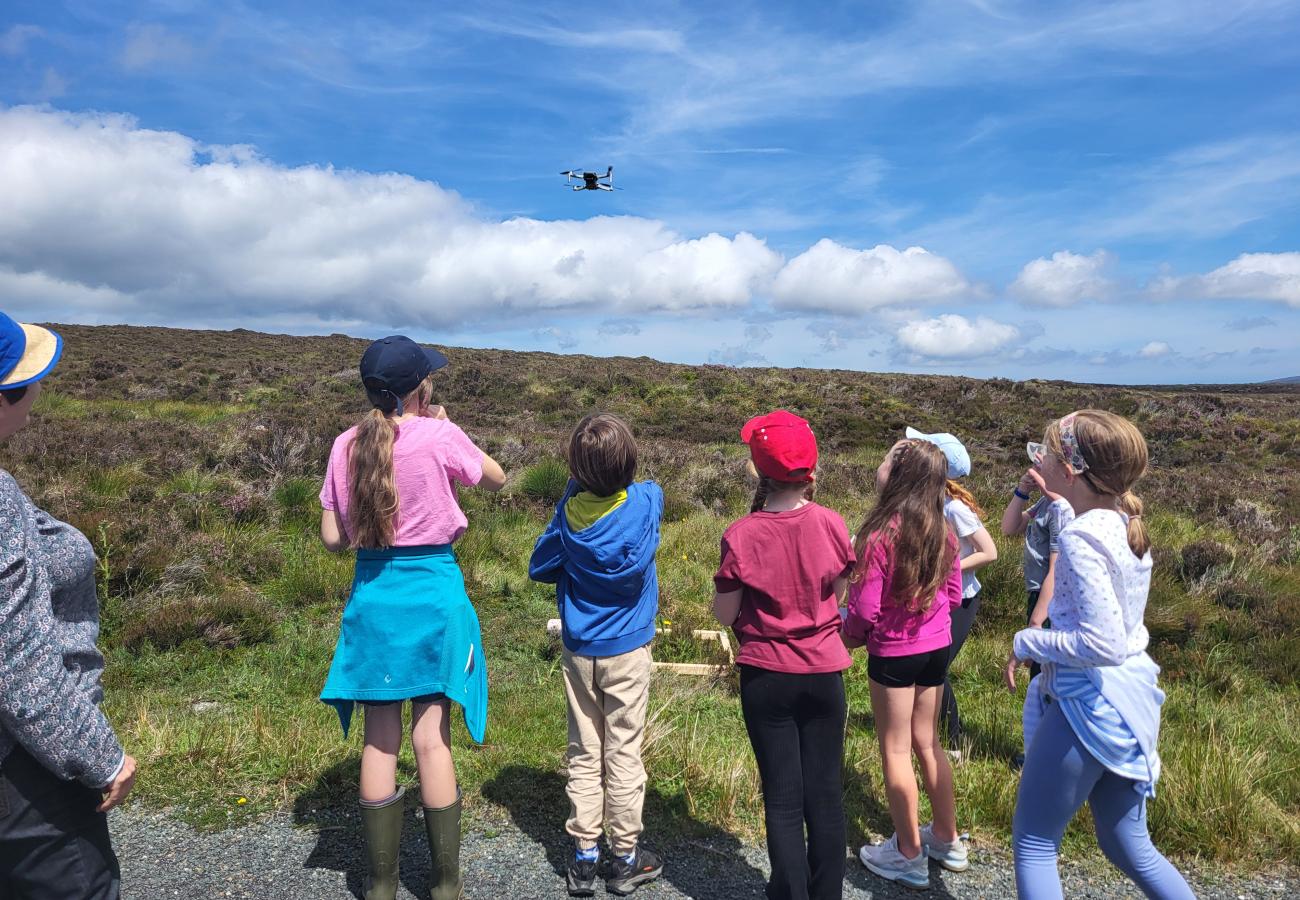
An unexpected highlight of the morning was when Denis took out his drone for an aerial shot of the group. Everyone wanted to have a look at his viewfinder and see the bog from above.
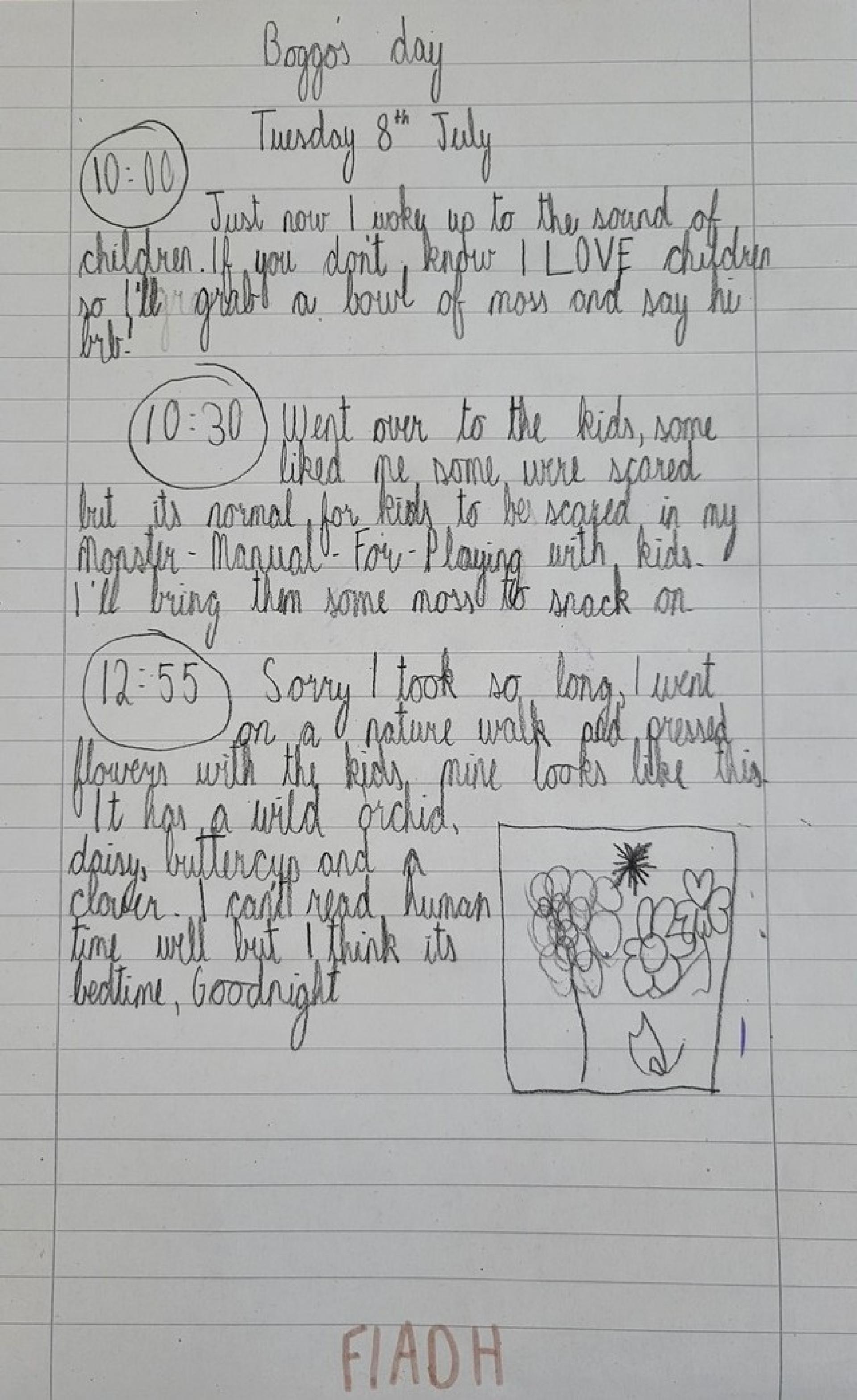
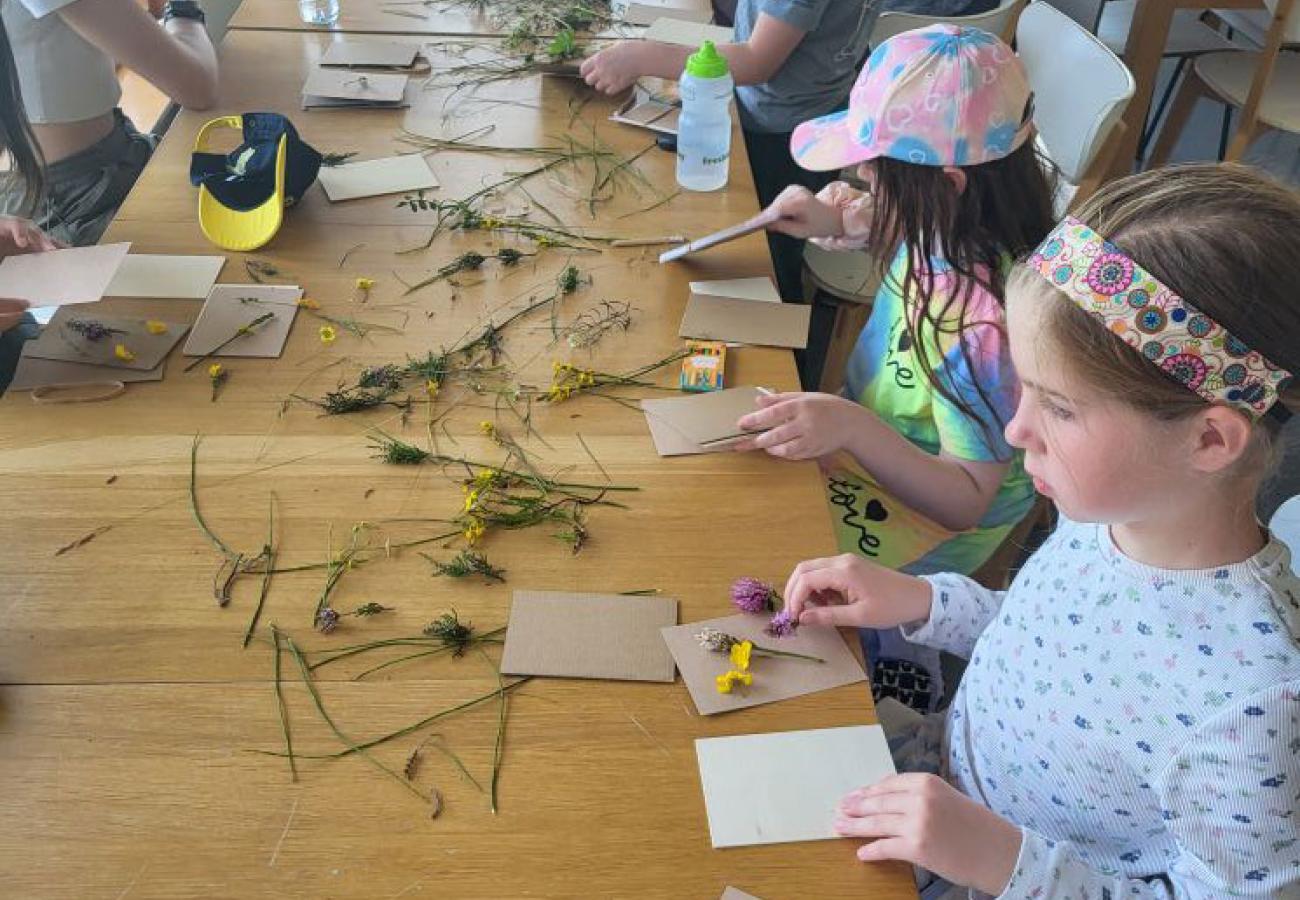
After 90 minutes in the hot sun, we boarded the bus again and drove to a nearby hostel to eat our packed lunch. On the walk back down the path, we collected some flower samples for a bit of flower pressing later in the afternoon.
In the Library
Back in basecamp the next morning, we knuckled down for the serious business of turning our field trip inspiration into pieces of nature writing.
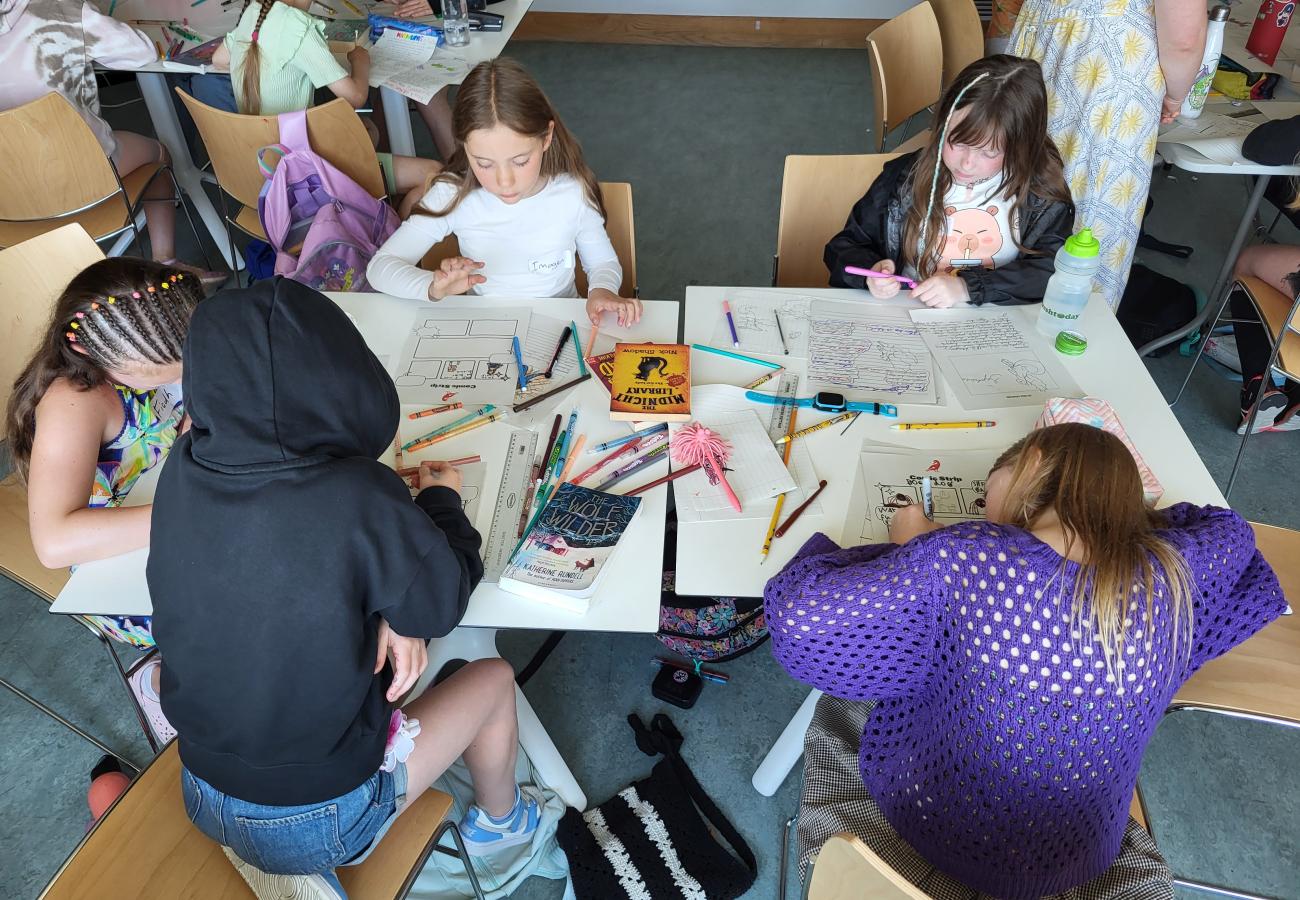
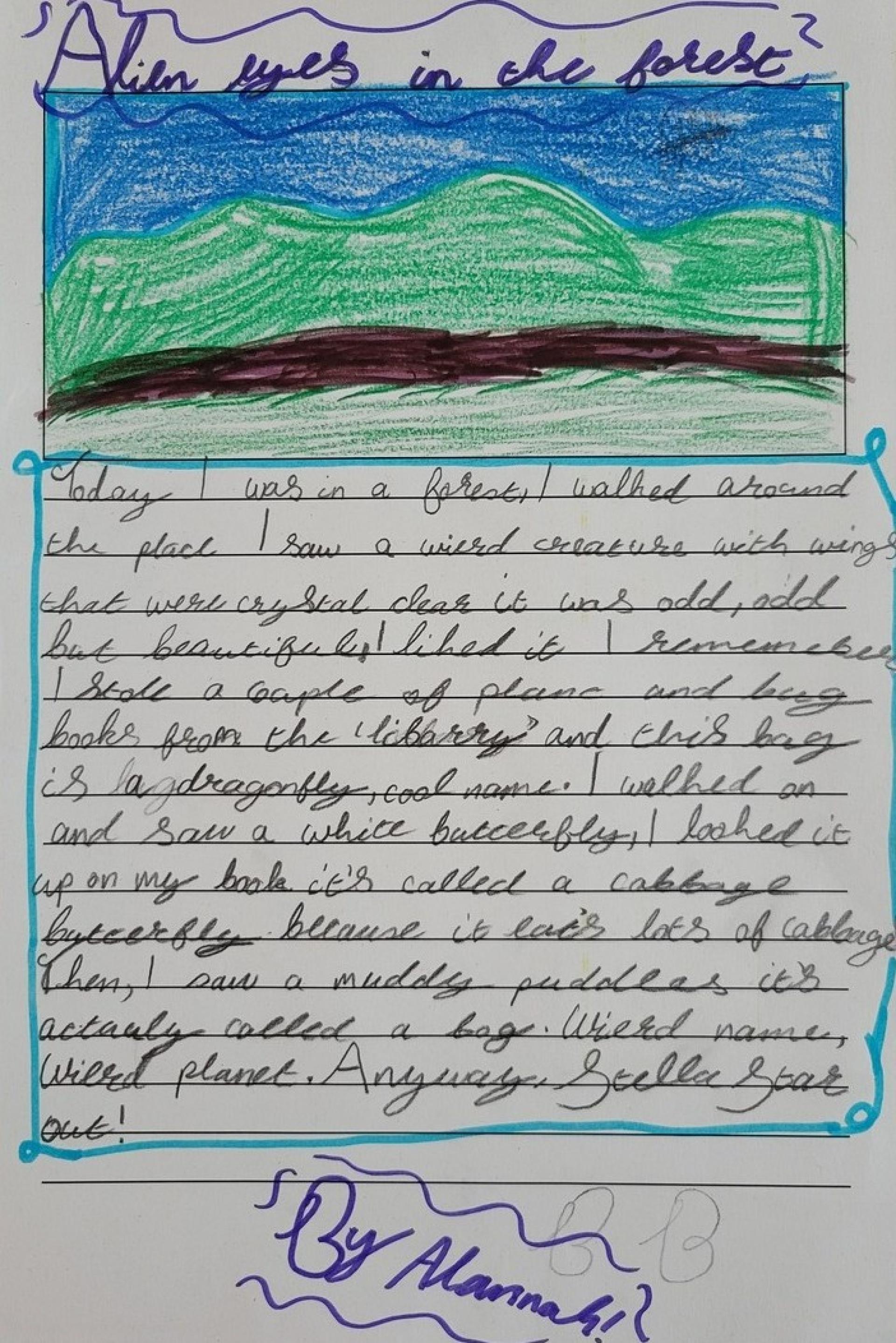
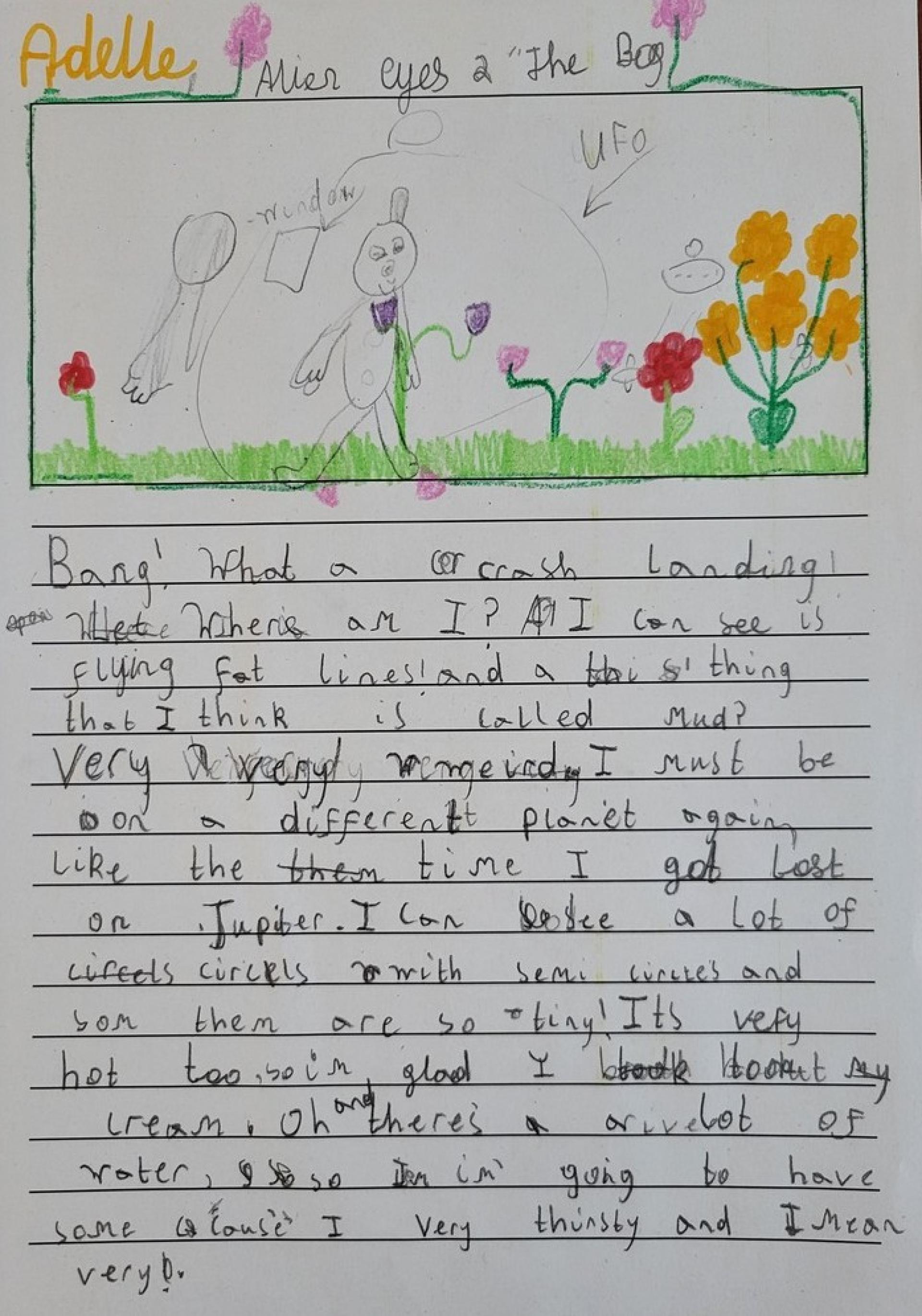
The first exercise we did was called Alien Eyes where the writers were challenged to imagine they were aliens arriving on earth for the first time. We asked them to write about the bog from the alien’s perspective, as if they had never seen such a landscape before.
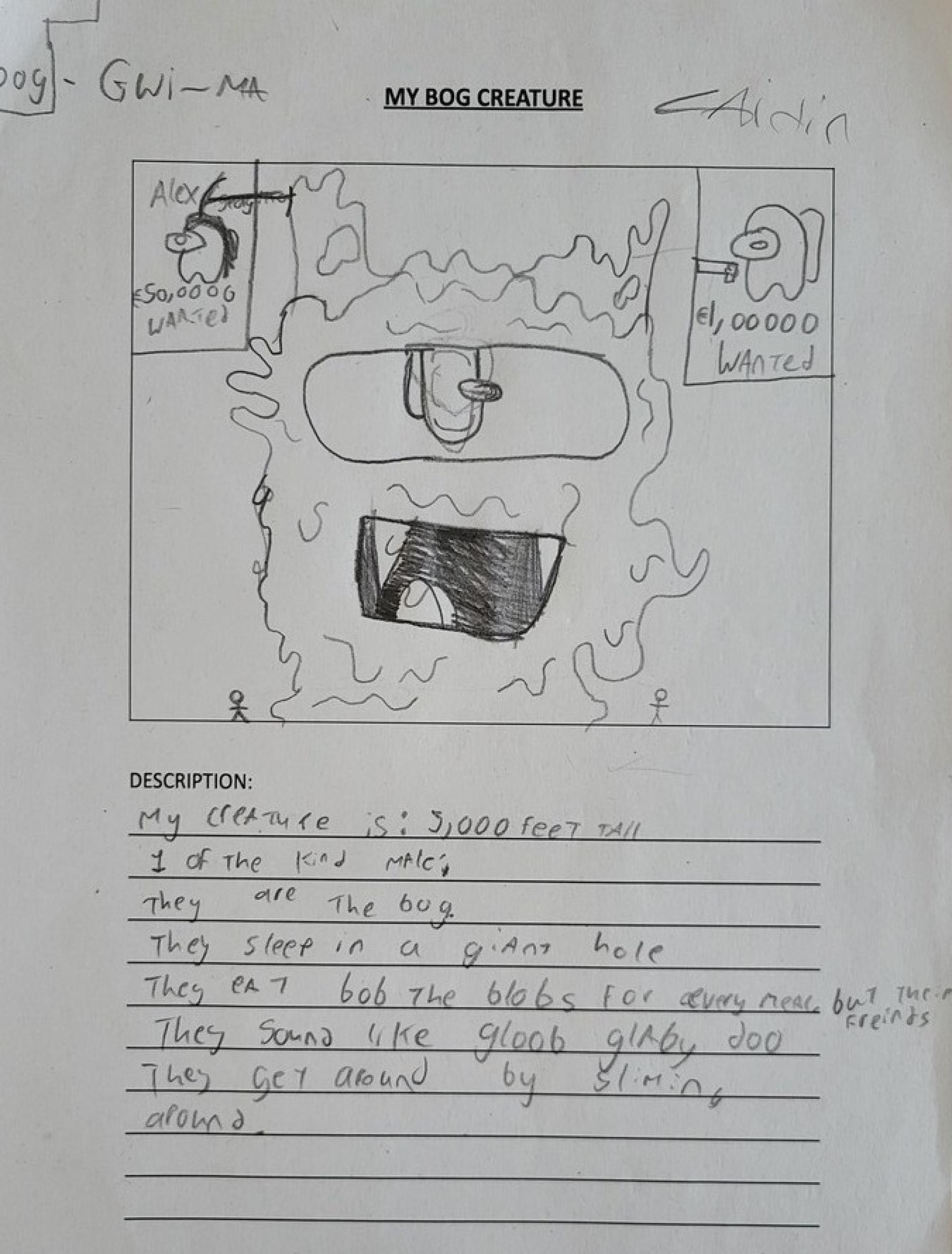
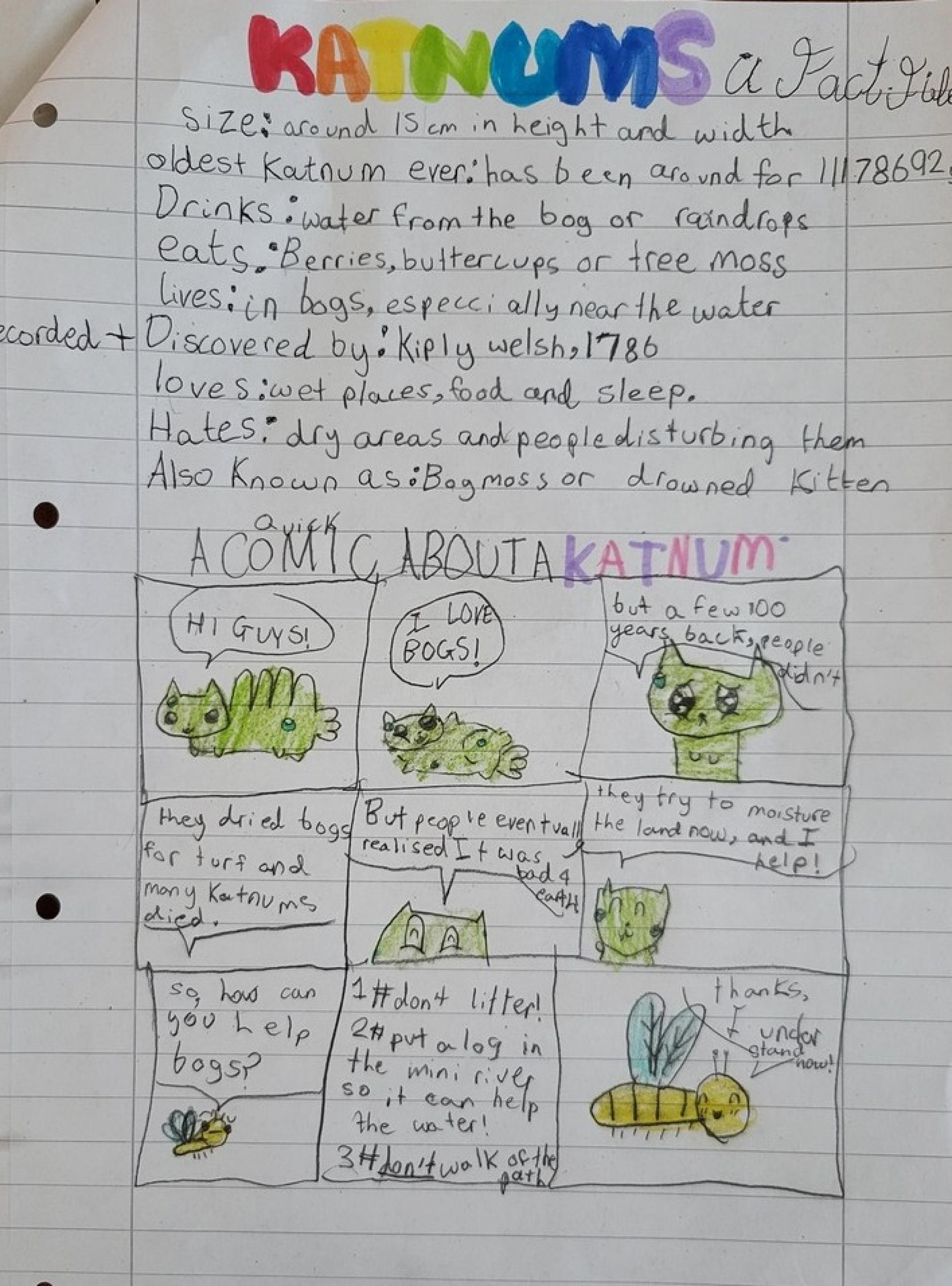
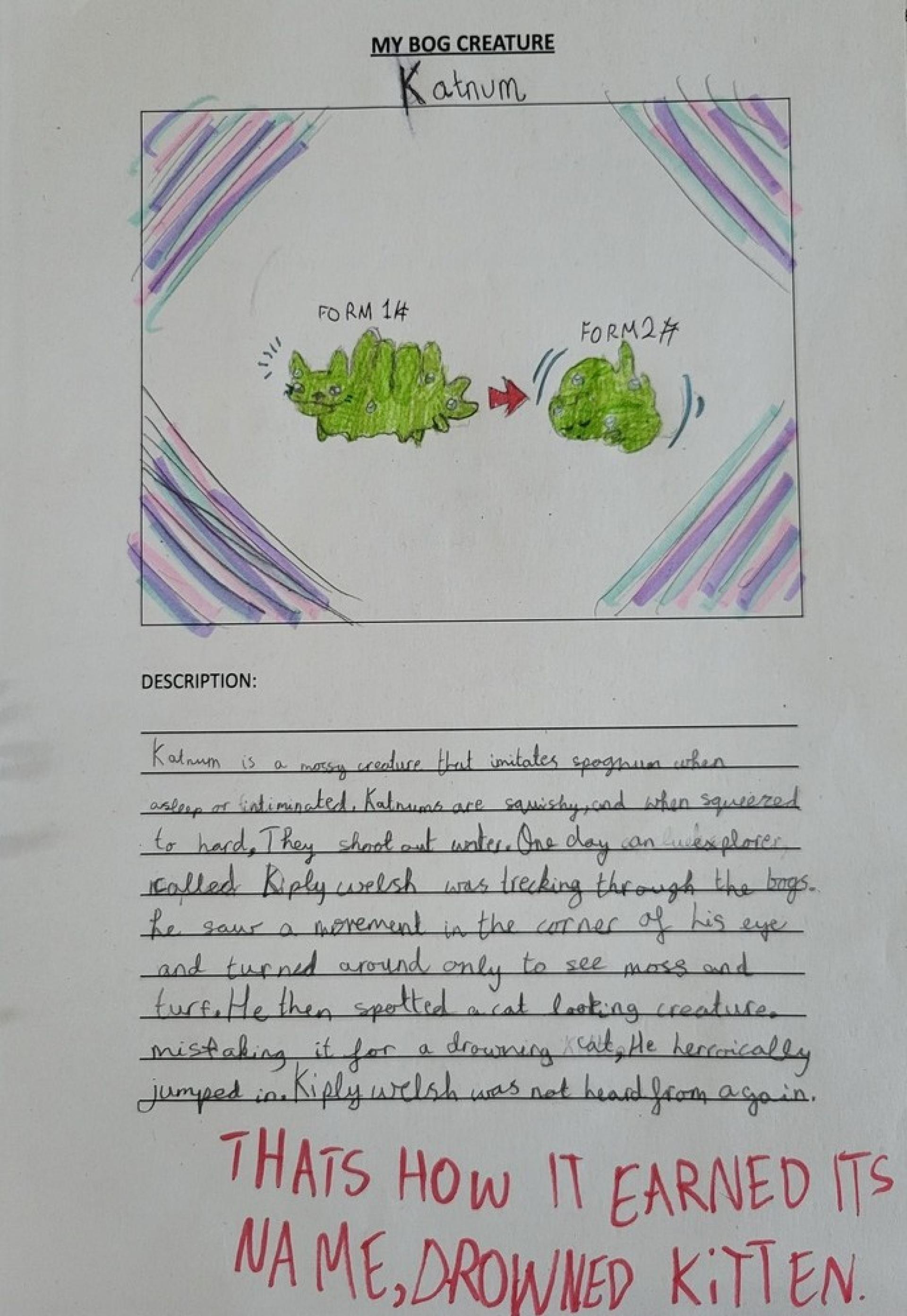
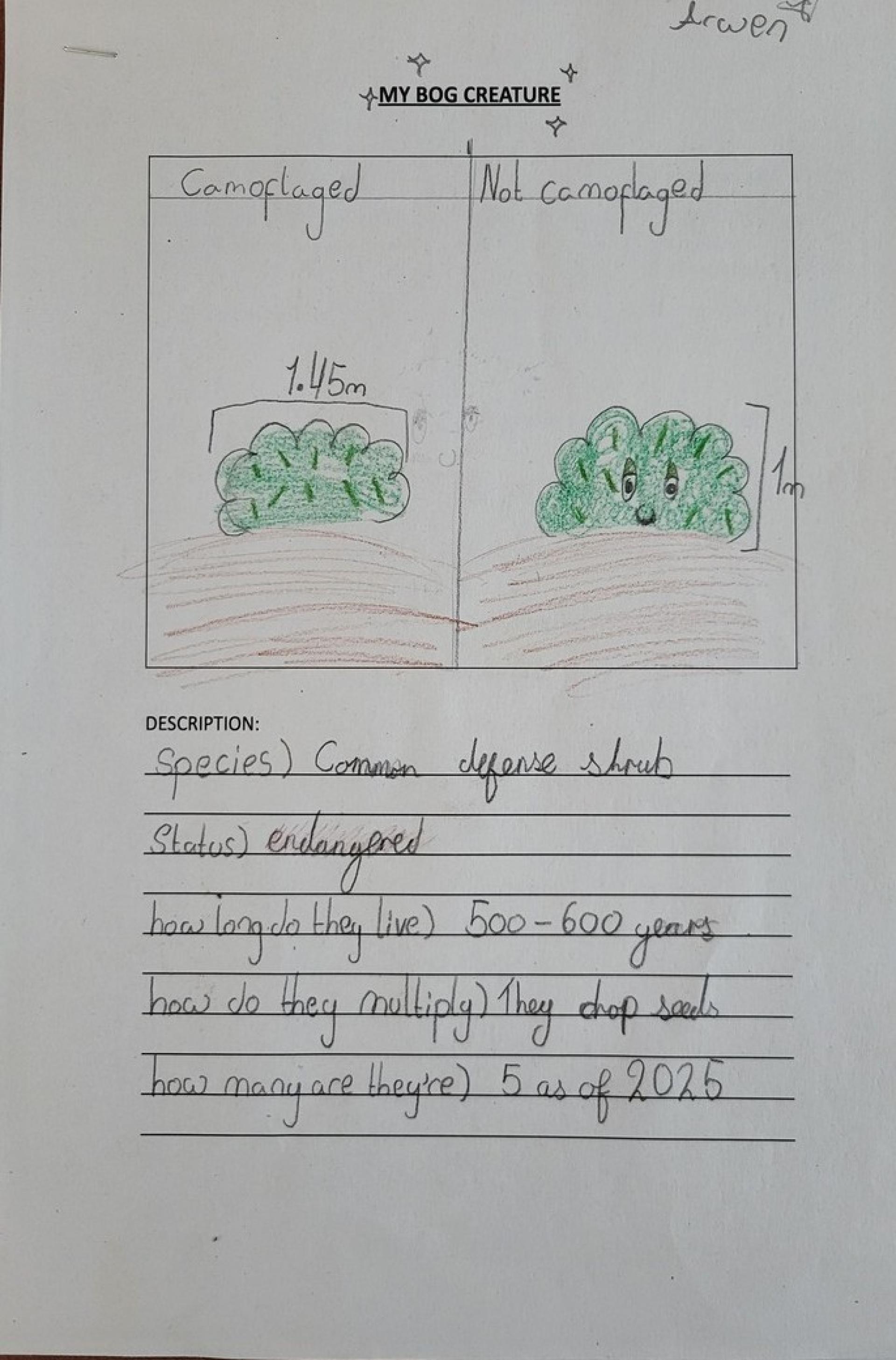
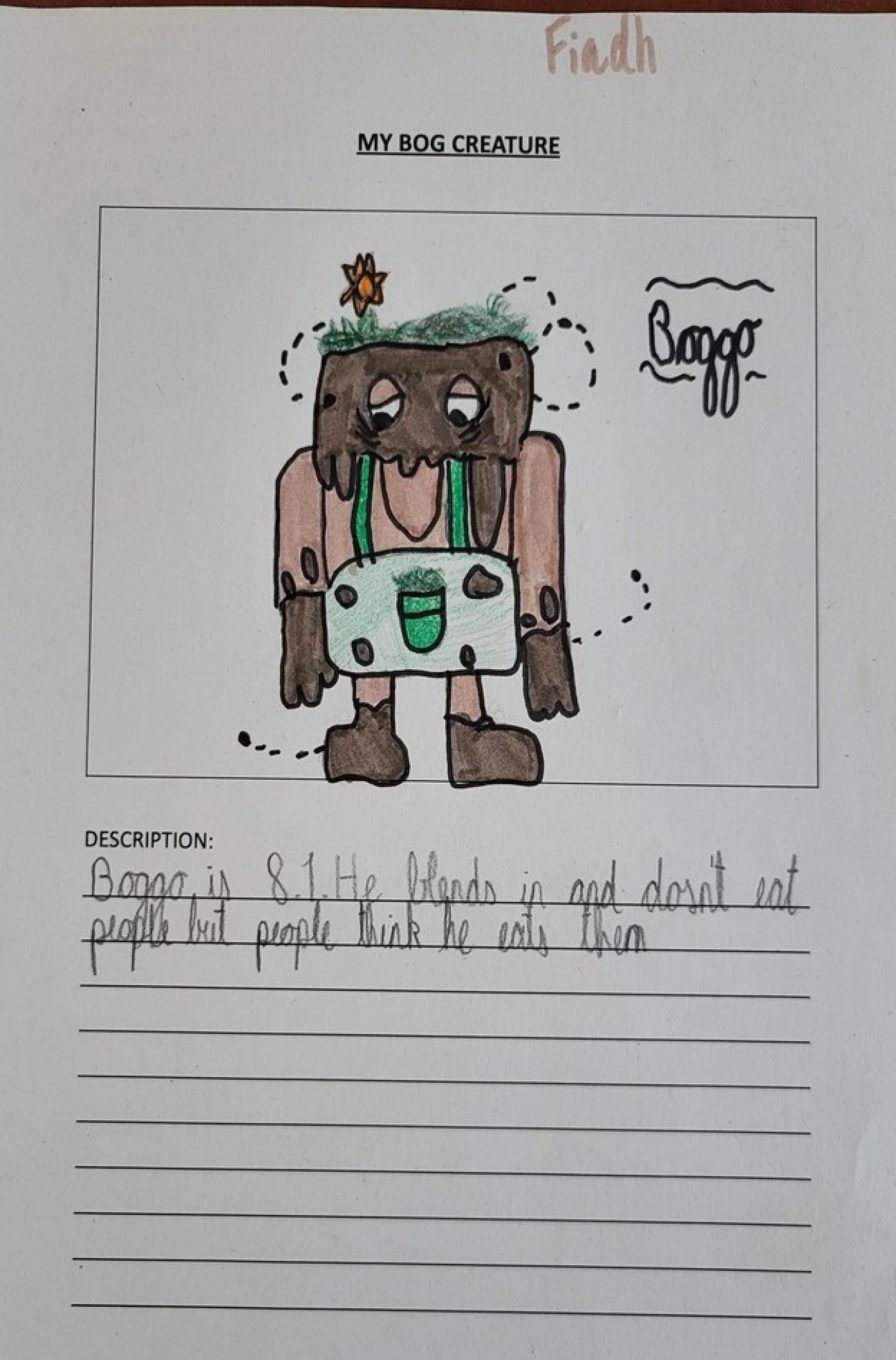
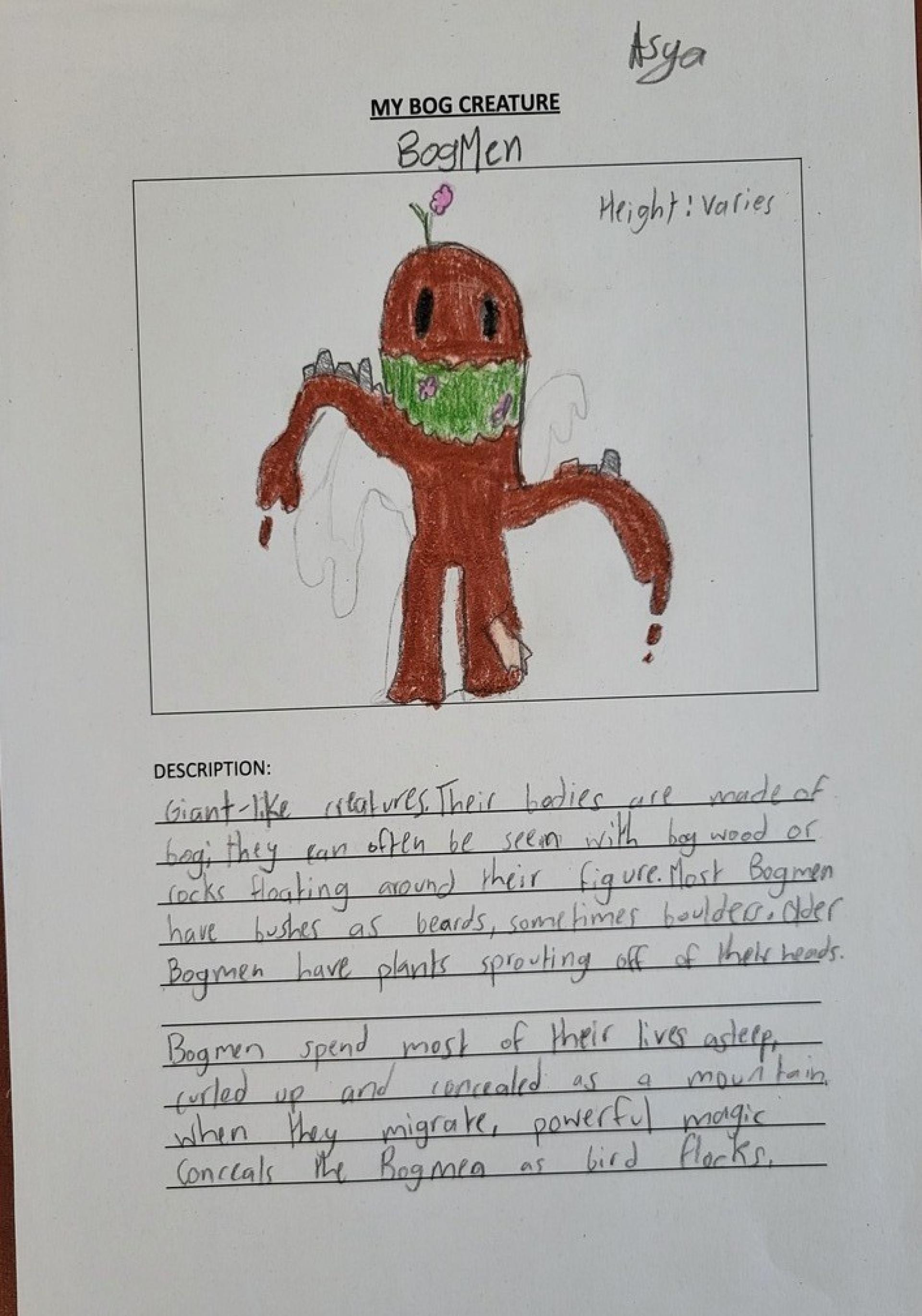
The second exercise challenged them to think about the bog as a habitat. We asked them to invent new bog creatures that might live on or around the bog, and how the habitat might influence the way they lived.
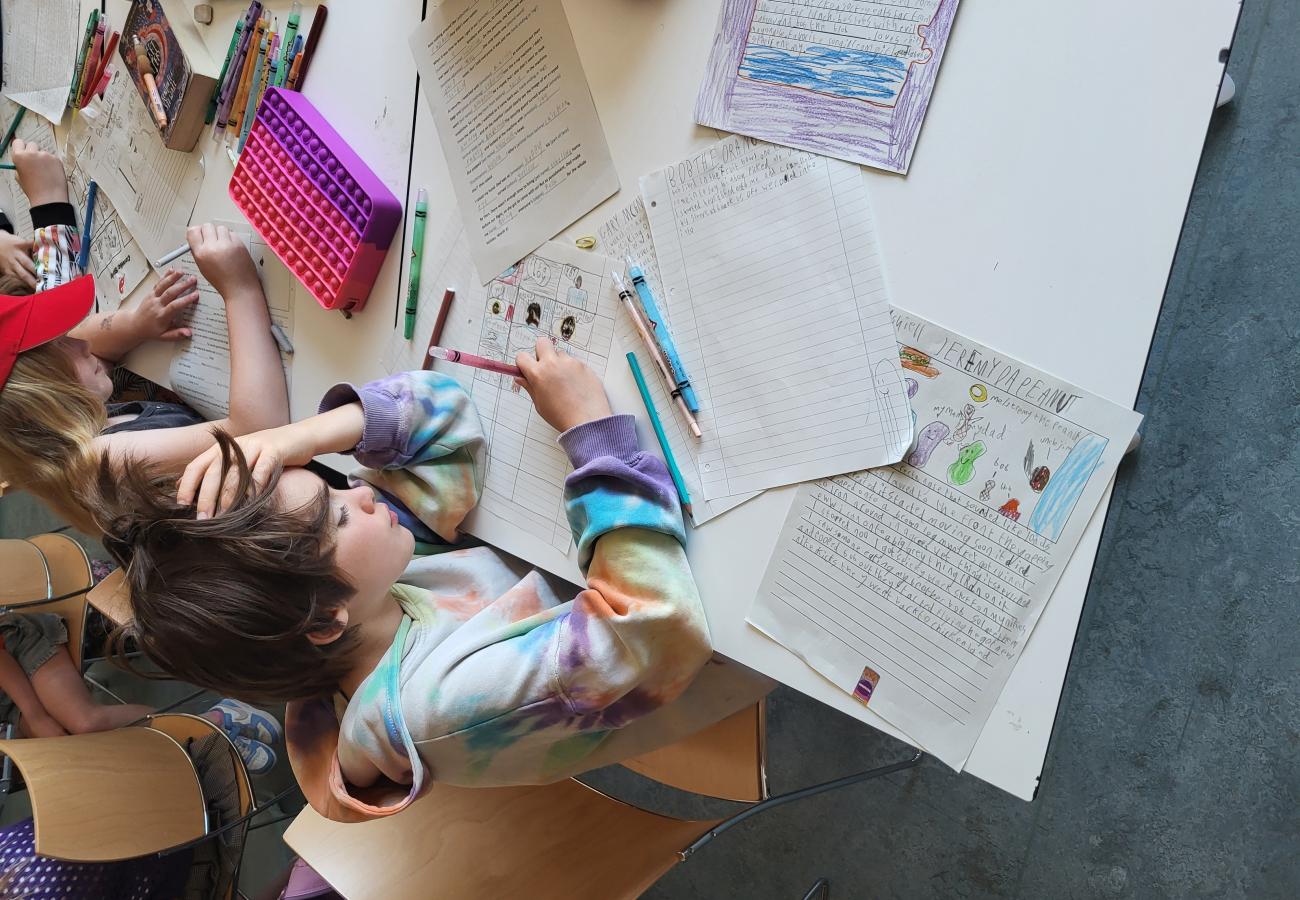
Our young writers took to both tasks enthusiastically, with many of them writing pages of additional notes or stories about their creatures or their aliens.
At the end of the week, these pieces of work were compiled into a booklet for the young writers to keep.
Thank you so much to Blessington Library for hosting us for this brilliant project, thanks to Anne and Denis for inspiring such a unique summer camp, and most of all, thanks to our young writers for their hard work!
Have a look below at some work samples from the week.
See The School of Looking’s website for more information about the Catchments 2025 project and their funding partners.